Writing as Purpose: Returning to the Act of Calligraphy
Why do we write? In an age where words are typed, erased, and rewritten in seconds, the act of writing by hand can feel almost unnecessary. Yet within Chinese calligraphy lies a different answer—one that suggests writing does not need an external goal to justify itself. Writing, in this sense, is its own purpose.
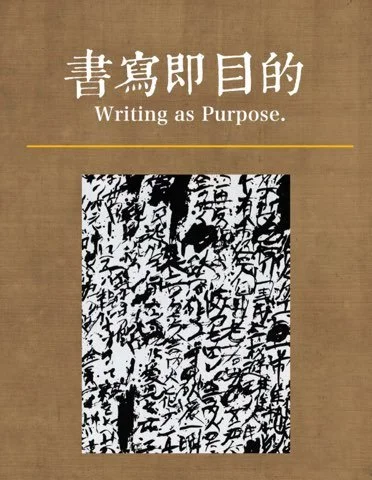
Calligraphy is not simply the transmission of language. When brush meets paper, meaning does not arrive fully formed. Instead, it unfolds. The stroke carries rhythm, pressure, hesitation, and release. What appears on the page is not just a character, but a record of movement. It is the trace of a moment lived fully and expressed without revision.
Unlike writing for communication alone, calligraphy does not cling to fixed interpretation. The separation between sign and meaning opens space for possibility. A single character may evoke comfort for one viewer and strength for another. This openness is not accidental—it is essential. The artist does not predefine the outcome but enters into a dialogue with brush and ink, allowing the work to reveal itself gradually.
The process itself becomes the center. The brush is held, ink is absorbed, and the hand moves slowly. Each gesture reflects breath and awareness. There is no undo button, no polishing after the fact. What remains on the page is honest. In this way, calligraphy becomes an encounter with presence. The body participates fully; the mind settles into focus; time seems to stretch and soften.
In traditional thought, writing as purpose means that the act itself carries vitality. It does not serve utility alone. It is not decoration, nor merely a vehicle for information. Instead, it affirms existence through action. To write is to assert life in motion—to resist emptiness by creating form through attention and care.
This understanding reshapes how we view art and creativity. When the emphasis shifts from product to process, from perfection to participation, something changes internally. The work becomes less about outcome and more about engagement. The brush moves, and meaning emerges through difference—through subtle variations in pressure, pace, and pause.
Chinese calligraphy invites us back to something simple yet profound: to write not for display, but for presence. To allow the flow of ink to mirror the flow of thought. To rediscover that creativity can be both quiet and powerful at once.
If you would like to explore this practice and experience writing as purpose for yourself, visit https://jojocalligraphy.com to learn more about upcoming classes and workshops.